
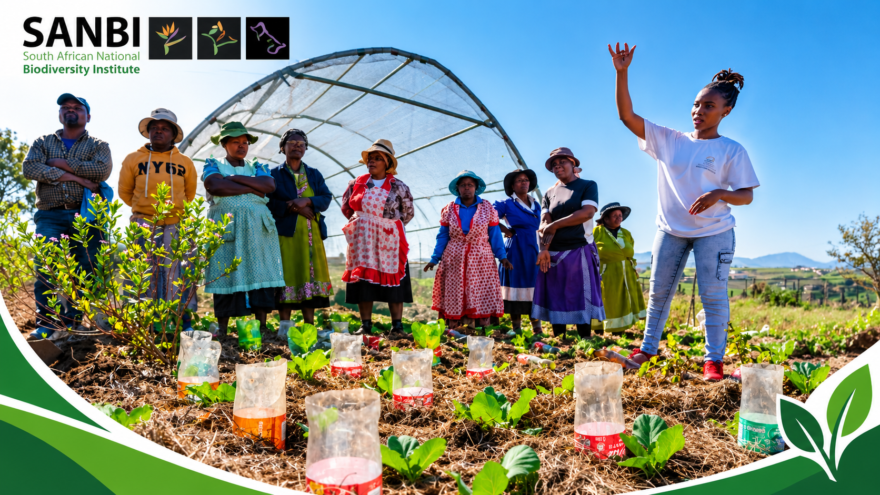
The South African National Biodiversity Institute (SANBI) is inviting second- and third-year Nature Conservation diploma students to apply for its CATHSSETA-sponsored Work Integrated Learning (WIL) Programme for 2027. The programme offers 30 placements across nine locations in South Africa, with a monthly stipend of R3,500. Applications close on 22 October 2026.
This 12-month programme will provide eligible students with practical workplace exposure in botanical gardens and zoological facilities. Students seeking to develop their environmental conservation knowledge and gain valuable workplace experience can apply for placements running from January to December 2027.
Key Details
| Details | Information |
| Organisation | South African National Biodiversity Institute (SANBI) |
| Programme | Nature Conservation Work Integrated Learning |
| Funding Partner | CATHSSETA |
| Programme Year | 2027 |
| Opportunity Type | Work Integrated Learning (WIL) |
| Total Placements | 30 |
| Qualification | Nature Conservation Diploma (NQF Level 6) |
| Duration | 12 months |
| Starting Date | January 2027 |
| Ending Date | December 2027 |
| Monthly Stipend | R3,500 |
| Accommodation | Not provided |
| Closing Date | 22 October 2026 |
| Application Method | Online application form |
Who Should Apply?
This programme is intended for second- and third-year university students currently studying towards a Diploma in Nature Conservation at NQF Level 6.
It is particularly suitable for students who require practical workplace training as part of their academic programme and have an interest in environmental conservation.
Applicants should be self-motivated, passionate about nature conservation and willing to develop their practical knowledge.
Salary / Stipend
Successful students will receive a monthly stipend of R3,500 during the 12-month placement.
The programme runs from January 2027 to December 2027.
SANBI has confirmed that accommodation will not be provided. Applicants should consider accommodation and transport arrangements when selecting their preferred placement location.
About SANBI
The South African National Biodiversity Institute (SANBI) is a public institution responsible for supporting biodiversity research, conservation and the management of South Africa’s biodiversity resources.
SANBI manages national botanical gardens and undertakes biodiversity-related research, education and conservation activities.
The 2027 Nature Conservation WIL Programme is sponsored by CATHSSETA and provides qualifying students with an opportunity to complete practical workplace learning.
Available WIL Placements
SANBI is offering 30 placements at nine botanical garden and zoological garden locations.
| Placement Location | Province | Number of Placements |
| Kirstenbosch National Botanical Garden, Newlands, Cape Town | Western Cape | 2 |
| Kwelera National Botanical Garden, East London | Eastern Cape | 2 |
| Pretoria National Botanical Garden | Gauteng | 2 |
| Walter Sisulu National Botanical Garden, Roodepoort | Gauteng | 2 |
| KwaZulu-Natal National Botanical Garden, Pietermaritzburg | KwaZulu-Natal | 2 |
| Thohoyandou National Botanical Garden | Limpopo | 2 |
| Free State National Botanical Garden, Bloemfontein | Free State | 2 |
| National Zoological Gardens, Mokopane | Limpopo | 2 |
| National Zoological Gardens, Pretoria | Gauteng | 14 |
| Total | 30 |
The National Zoological Gardens in Pretoria has the largest number of placements, with 14 opportunities.
Minimum Requirements
Applicants must meet the following requirements:
- Be a second- or third-year university student studying towards a Diploma in Nature Conservation.
- Be enrolled in a Diploma-level programme at NQF Level 6.
- Be self-motivated.
- Demonstrate a passion for the environment and nature conservation.
- Be available for a 12-month placement from January to December 2027.
- Have the required university WIL placement letter for 2027.
Students who have already graduated must not apply.
Experience / Added Advantage
SANBI has indicated that good academic grades will be a strong advantage.
Duties and Responsibilities
The programme is intended to provide practical workplace learning relevant to Nature Conservation studies.
Specific responsibilities and learning activities will depend on the placement location and the arrangements made by SANBI.
Skills Gained
Depending on the placement and assigned learning activities, participants may gain exposure to:
- Nature conservation practices.
- Environmental management.
- Biodiversity conservation.
- Botanical garden or zoological facility operations.
- Workplace communication.
- Teamwork and professional conduct.
- Practical application of academic knowledge.
These are potential learning areas rather than guaranteed individual training modules.
Required Documents
Applicants must upload all the following documents through the official application form:
- Letter of application.
- Curriculum Vitae (CV).
- Academic reference letter.
- WIL placement letter from the university, clearly reflecting the 2027 placement.
- Certified copy of the highest qualification.
- Proof of registration for the 2026 academic year.
- Certified copy of academic transcript.
- Clear certified copy of South African identity document, not older than three months.
Successful candidates will also be required to provide proof of registration for the 2027 academic year.
Important: SANBI states that applications missing the required documents will be rejected.
Useful Career27 Links
Explore additional opportunities:
How to Apply
Applications must be submitted using SANBI’s official online application form.
Official Application Form:
Apply for SANBI Nature Conservation WIL 2027
Applicants should complete the form accurately and upload all required supporting documents.
Application Process
- Open the official SANBI application form.
- Read the application instructions.
- Complete the required personal and academic information.
- Provide the relevant placement information requested by the form.
- Upload all required documents.
- Check that the information and attachments are correct.
- Submit the application before the closing date.
Application Enquiries
Contact person: Ms Nokonwaba Ngele
Email: N.Ngele@sanbi.org.za
Subject: CATHSSETA-SPONSORED WIL placement.
The email address is provided for application-process enquiries. Applications must be submitted through the official online form.
Closing Date
Thursday, 22 October 2026
Applicants should submit their applications before the deadline.
Candidates must be available for interviews on dates and times determined by SANBI.
SANBI reserves the right not to fill the placements.
Applicants who do not receive a response within 30 days after the closing date may regard their applications as unsuccessful.
Frequently Asked Questions
How many SANBI WIL placements are available for 2027?
SANBI is offering 30 Nature Conservation WIL placements across nine locations in South Africa.
How much is the SANBI WIL stipend?
Successful students will receive R3,500 per month.
Can N6 TVET College students apply?
The programme specifically targets second- and third-year university students studying towards an NQF Level 6 Diploma in Nature Conservation. It is not advertised as an N6 TVET College placement.
Can graduates apply?
No. SANBI specifically states that students who have already graduated should not apply.
Does SANBI provide accommodation?
No. Accommodation is not provided.
How long is the placement?
The placement lasts 12 months, from January to December 2027.
Which location has the most placements?
The National Zoological Gardens in Pretoria has 14 placements.
Sources & References
Disclaimer
Career27 is an independent career information platform and is not affiliated with SANBI or CATHSSETA.
This article is provided for informational purposes to assist students seeking work-integrated learning opportunities.
Applications must be submitted through the official SANBI application form. Career27 does not recruit or select applicants on behalf of SANBI.
Applicants are encouraged to verify the application requirements and closing date directly with SANBI before submitting their applications.
